
Sprayon EL848 Flash Free® Electrical Degreaser, Aerosol Can - sprayon electrical degreaser sc0848000
The MagSens can be purchased separately or supplied as an integral part with any of the RHGSE model. The MagSens system provides the rescue hoist maintainer the capability to measure and record locations of defects over it’s installed life.
The Hydraulic RHGSE was designed for the high end and heavy SAR users in mind. It allows continual use without over heating.
The Electric RHGSE was designed to add the capability to automatically extend the rescue hoist cable on the manual RHGSE using electrical power. The Electric RHGSE can extend the cable with a minimum of 40 lbs on the cable while maintaining a positive tension on the cable when extending and preventing the rescue hoist from squeezing the outer strands excessively, thus delaying the unwinding of the outer strands on the rescue hoist cable. The Electric RHGSE uses single phase AC power in the hanger or from the aircraft and still retains the capability to operate remotely using human power when required. Learn More »
As a result of using the Rescue Hoist Ground Support Equipment (RHGSE), you will see a reduction in fuel consumption and in blade and man hours.
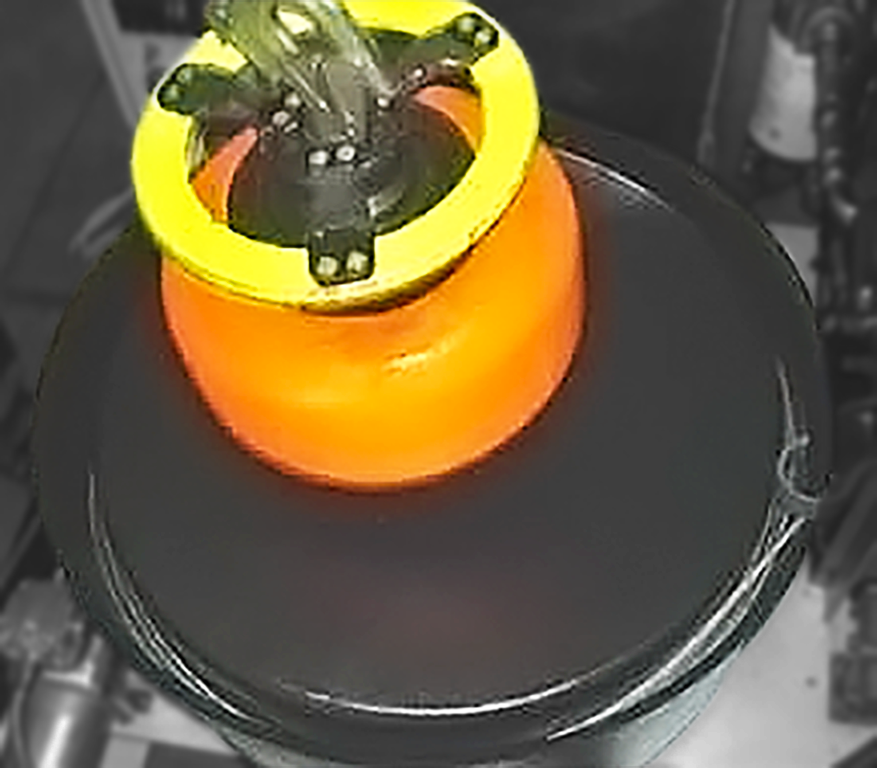
Allows one person to perform all inspections and maintenance operations in a minimum amount of time, while the hook and bearing are still attached to the cable.
The RHGSE can be easily transported by one person, forklift, or tug. By using the tow handle the RHGSE can be easily moved and positioned under the rescue hoist next to the aircraft, in order to perform pre and post flight checks of the cable and rescue hoist system.
The Hydraulic RHGSE was designed for the high end and heavy SAR users in mind. It allows continual use without over heating.Learn More »
Allows one person to perform all inspections and maintenance operations in a minimum amount of time, while the hook and bearing are still attached to the cable.
The Zephyr RHGSE was specifically designed to season and tension the cable without having to fly the helicopter after a complete cable inspection.
The RHGSE can be easily transported by one person, forklift, or tug. By using the tow handle the RHGSE can be easily moved and positioned under the rescue hoist next to the aircraft, in order to perform pre and post flight checks of the cable and rescue hoist system.
When a hoist cable loosens and fouls the hoist, the resulting damage can cost thousands of dollars to repair and means significant time with the OEM. In addition, if the cable miswraps on the lower layers when winding, and the operator does not see the miswrap, the cable can foul in flight putting the crew and the mission in jeopardy.
It has demonstrated itself to the customer to be cost effective and also a good safety tool when tensioning, cleaning, lubricating, drying and examining the hoist cable after each mission and/or at hoist and cable maintenance times.
The Manual RHGSE was designed for the rescue hoist user in order to provide a lower cost hoist and cable maintenance system. It requires human power to extend the cable instead of a hydraulic motor as supplied on the hydraulic version, while still providing all the other capabilities to tension, wash, dry, lubricate and inspect the rescue hoist cable.Learn More »
The rotatub can be filled with fresh water to rinse saline residuals off the cable. A plug is provided to drain the water.
The RHGSE maintains positive manual tension on the cable as it extends and applies a heavy load over the length as it retracts while maintaining a clean and tight cable storage on the rescue hoist drum.
The RHGSE maintains positive manual tension on the cable as it extends and applies a heavy load over the length as it retracts while maintaining a clean and tight cable storage on the rescue hoist drum.
The RHGSE keeps the cable off the ground and in a protective enclosure during hoist maintenance. While doing these maintenance tasks human hands do not need to touch the cable while it is wound inside a drum to be cleaned; thus, protecting the maintainers hands and avoiding any possibility of getting the hands entangled in the cable. The cable is collected in a rotating tub and spooler system, and accommodates any rescue hook and bumper configuration.
When a hoist cable loosens and fouls the hoist, the resulting damage can cost thousands of dollars to repair and means significant time with the OEM. In addition, if the cable miswraps on the lower layers when winding, and the operator does not see the miswrap, the cable can foul in flight putting the crew and the mission in jeopardy.
Hoists can fail as a result of poor ground handling or poor hoist situational awareness, resulting in loose cable wraps.
Helicopter rescue hoists use tension rollers to keep their cable tight on the drum. The tensioning device relies on physical contact with the cable and tend to milk the cable’s inherent looseness to the lower end of the cable. Thus the cable starts to unwind, resulting in loose outer strands. As a preventative measure, the hoist manufacturers recommend applying a high load while retracting the cable after running it out for an inspection or a wash down, after every mission.Zephyr’s RHGSE will meet this requirement.
Hoists can fail as a result of poor ground handling or poor hoist situational awareness, resulting in loose cable wraps.
The current practice for tensioning and load checking the cable on the rescue hoist is shown. It is a very expensive process and it can sometimes shock load the cable, thus requiring replacement.
The RHGSE keeps the cable off the ground and in a protective enclosure during hoist maintenance. While doing these maintenance tasks human hands do not need to touch the cable while it is wound inside a drum to be cleaned; thus, protecting the maintainers hands and avoiding any possibility of getting the hands entangled in the cable. The cable is collected in a rotating tub and spooler system, and accommodates any rescue hook and bumper configuration.
The rotatub can be filled with fresh water to rinse saline residuals off the cable. A plug is provided to drain the water.
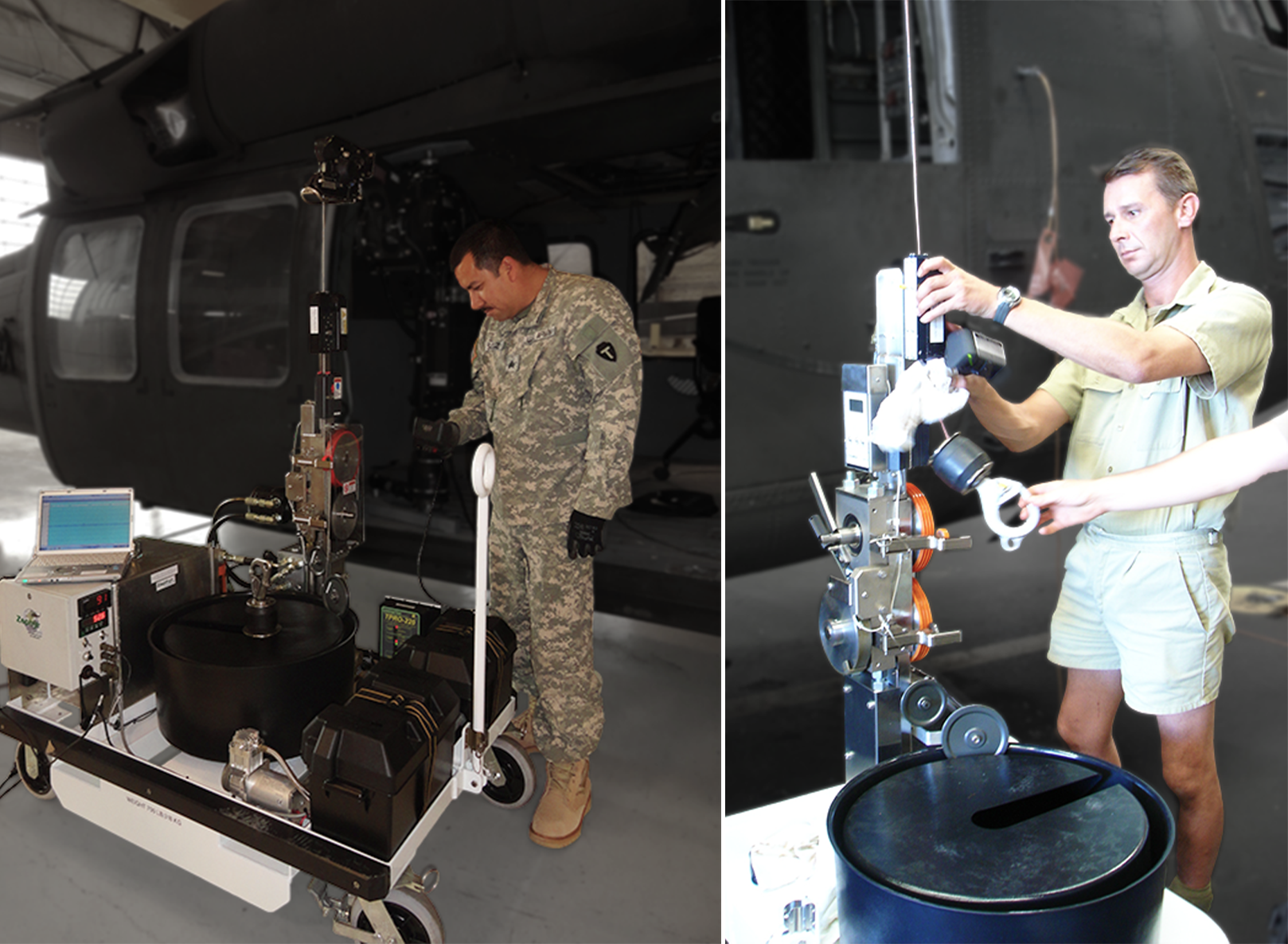
Helicopter rescue hoists use tension rollers to keep their cable tight on the drum. The tensioning device relies on physical contact with the cable and tend to milk the cable’s inherent looseness to the lower end of the cable. Thus the cable starts to unwind, resulting in loose outer strands. As a preventative measure, the hoist manufacturers recommend applying a high load while retracting the cable after running it out for an inspection or a wash down, after every mission.
Historically, hoist failures occur when the hoist is run under no load and the cable gets loose on the drum and fouls the entire mechanism. Since the tensioning systems that are in use today only provide approximately 7 to 20 lbs of force on the cable, the cable tensioning system can easily be overcome and the cable loosens up on the drum. This normally will not happen in flight, but happens with regularity when the hoist is operated on the ground during inspections, maintenance, etc.
The current practice for tensioning and load checking the cable on the rescue hoist is shown. It is a very expensive process and it can sometimes shock load the cable, thus requiring replacement.Additionally, poor ground handling leads to high costs, lost opportunities, and possible catastrophic consequences.Increased safety is a result from the benefits of the equipment and provides other benefits such as eliminating the necessity of sitting in a hover to reseat or condition the cable, especially when in a hostile environment. The use of the equipment eliminates the possibility of a swinging, or spinning, load or the possibility of the cable getting damaged as a result of shock loading while slinging a dead weight.As a result of using the Rescue Hoist Ground Support Equipment (RHGSE), you will see a reduction in fuel consumption and in blade and man hours.
The Zephyr RHGSE was specifically designed to season and tension the cable without having to fly the helicopter after a complete cable inspection.It has demonstrated itself to the customer to be cost effective and also a good safety tool when tensioning, cleaning, lubricating, drying and examining the hoist cable after each mission and/or at hoist and cable maintenance times.
Historically, hoist failures occur when the hoist is run under no load and the cable gets loose on the drum and fouls the entire mechanism. Since the tensioning systems that are in use today only provide approximately 7 to 20 lbs of force on the cable, the cable tensioning system can easily be overcome and the cable loosens up on the drum. This normally will not happen in flight, but happens with regularity when the hoist is operated on the ground during inspections, maintenance, etc.
The RHGSE applies a heavy load over the entire length of cable on the hoist drum as it retracts the cable while the aircraft is on the ground. Allows the cable to relieve its inherent twist as it winds on and off the hoist drum. This is to simulate as closely as possible the effect of running the cable in and out in flight under load.
Increased safety is a result from the benefits of the equipment and provides other benefits such as eliminating the necessity of sitting in a hover to reseat or condition the cable, especially when in a hostile environment. The use of the equipment eliminates the possibility of a swinging, or spinning, load or the possibility of the cable getting damaged as a result of shock loading while slinging a dead weight.
The MagSens can be purchased separately or supplied as an integral part with any of the RHGSE model. The MagSens system provides the rescue hoist maintainer the capability to measure and record locations of defects over it’s installed life.
The RHGSE applies a heavy load over the entire length of cable on the hoist drum as it retracts the cable while the aircraft is on the ground. Allows the cable to relieve its inherent twist as it winds on and off the hoist drum. This is to simulate as closely as possible the effect of running the cable in and out in flight under load.
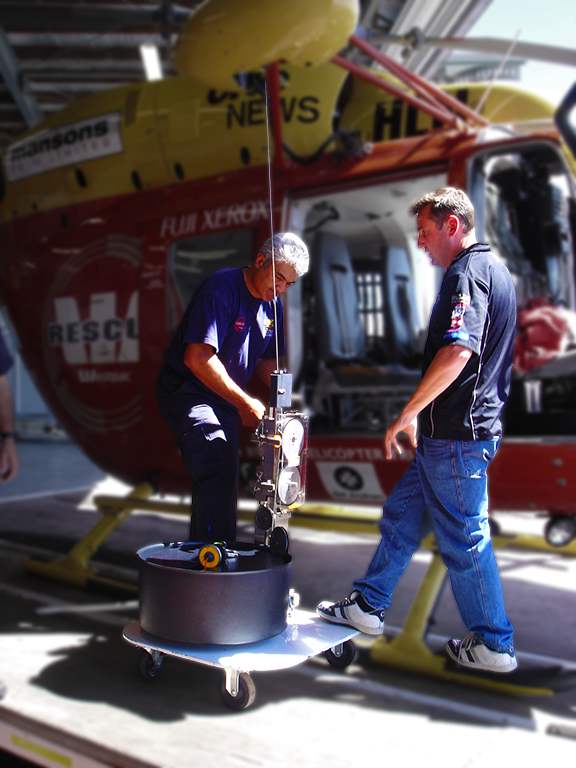
The Manual RHGSE was designed for the rescue hoist user in order to provide a lower cost hoist and cable maintenance system. It requires human power to extend the cable instead of a hydraulic motor as supplied on the hydraulic version, while still providing all the other capabilities to tension, wash, dry, lubricate and inspect the rescue hoist cable.
The Electric RHGSE was designed to add the capability to automatically extend the rescue hoist cable on the manual RHGSE using electrical power. The Electric RHGSE can extend the cable with a minimum of 40 lbs on the cable while maintaining a positive tension on the cable when extending and preventing the rescue hoist from squeezing the outer strands excessively, thus delaying the unwinding of the outer strands on the rescue hoist cable. The Electric RHGSE uses single phase AC power in the hanger or from the aircraft and still retains the capability to operate remotely using human power when required.



 Neil
Neil 
 Neil
Neil