
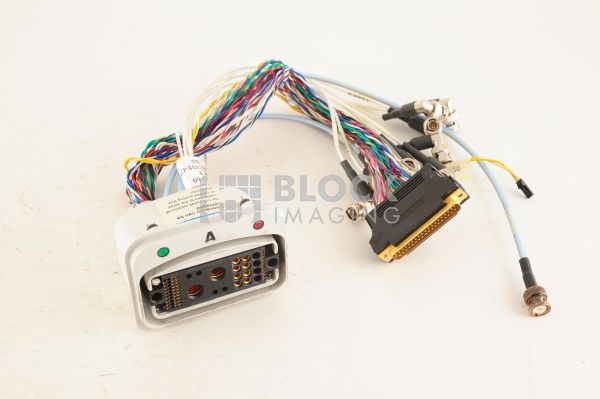
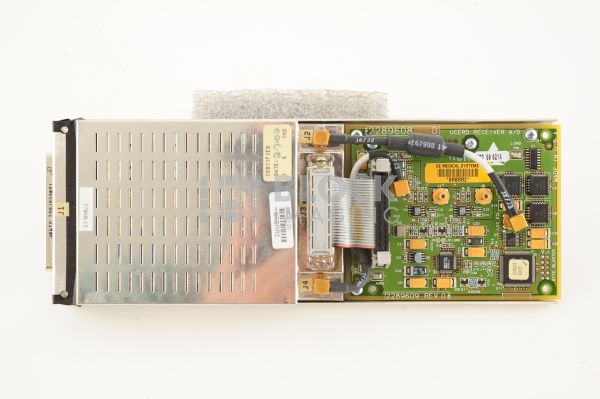
2322994 MDAS Thin Converter Board für GE CT - 2322994 MDAS Thin Converter Board for GE CT
The site is secure. The https:// ensures that you are connecting to the official website and that any information you provide is encrypted and transmitted securely.
The .gov means it’s official. Federal government websites often end in .gov or .mil. Before sharing sensitive information, make sure you’re on a federal government site.
The PubMed wordmark and PubMed logo are registered trademarks of the U.S. Department of Health and Human Services (HHS). Unauthorized use of these marks is strictly prohibited.
A "sandwich"-type radiolabeled antiglobulin assay using monoclonal anti-C5b-9 neoantigen and polyclonal anti-C5b-9 was used to evaluate the presence of terminal C complexes (SC5b-9 or MC5b-9) in the sera and ovarian follicular fluid (FF) from 45 infertile women. FF SC5b-9 was detectable in all clinical diagnostic categories. The mean SC5b-9 levels in FF and sera were 399 ng/ml (range 75 to 1350 ng/ml) and 798 ng/ml (range 0 to 2700 ng/ml), respectively. Twelve (26.6%) of the 45 FF samples had normal hemolytic C activity, and all FF (n = 44) samples initiated C8/C9-dependent lysis of sensitized sheep E coated with human C1-7. Human plasma IgG antisperm antibodies (ASA) were capable of activating C in 31 (72%) of 43 FF samples as detected by their ability to deposit MC5b-9 on human sperm. Sera from infertile women with ASA in their sera and FF impaired human sperm binding to human zona pellucida and binding and penetration of zona-free hamster oocytes in vitro. The discovery of SC5b-9 and MC5b-9 in ovarian FF implies that the interaction of ASA and C could have a deleterious effect on sperm during in vivo and in vitro sperm-egg interactions in women with antisperm antibodies.



 Neil
Neil 
 Neil
Neil