
LEONARD VALVE, Compatible with PNV-100/125-LF ... - pnv-125-lf caspak
To develop a holistic view of the Mexican space economy over this timespan, we can try to form a set of spatially connected regions that maximizes the internal socieconomic levels of the states belonging to each region.
Originally formulated as a mixed-integer problem in Duque, Anselin, Rey (2012), max-p is an NP-hard problem and exact solutions are only feasible for small problem sizes. As such, a number of heuristic solution approaches have been suggested. PySAL implements the heuristic approach described in Wei, Rey, and Knaap (2020).
We show you the best Primitivo wines. They are perfect for any occasion and are the most popular red wines in Switzerland!
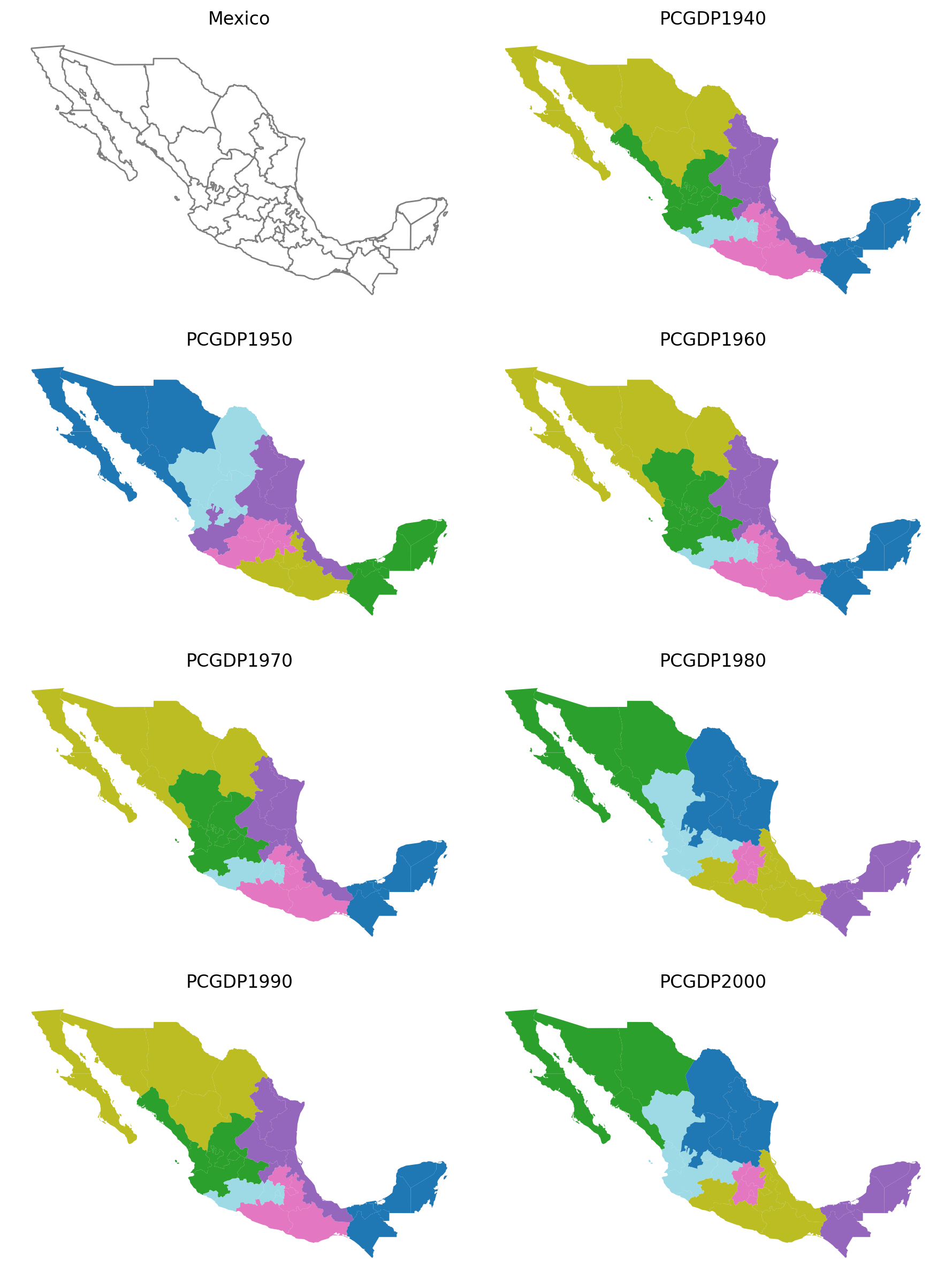
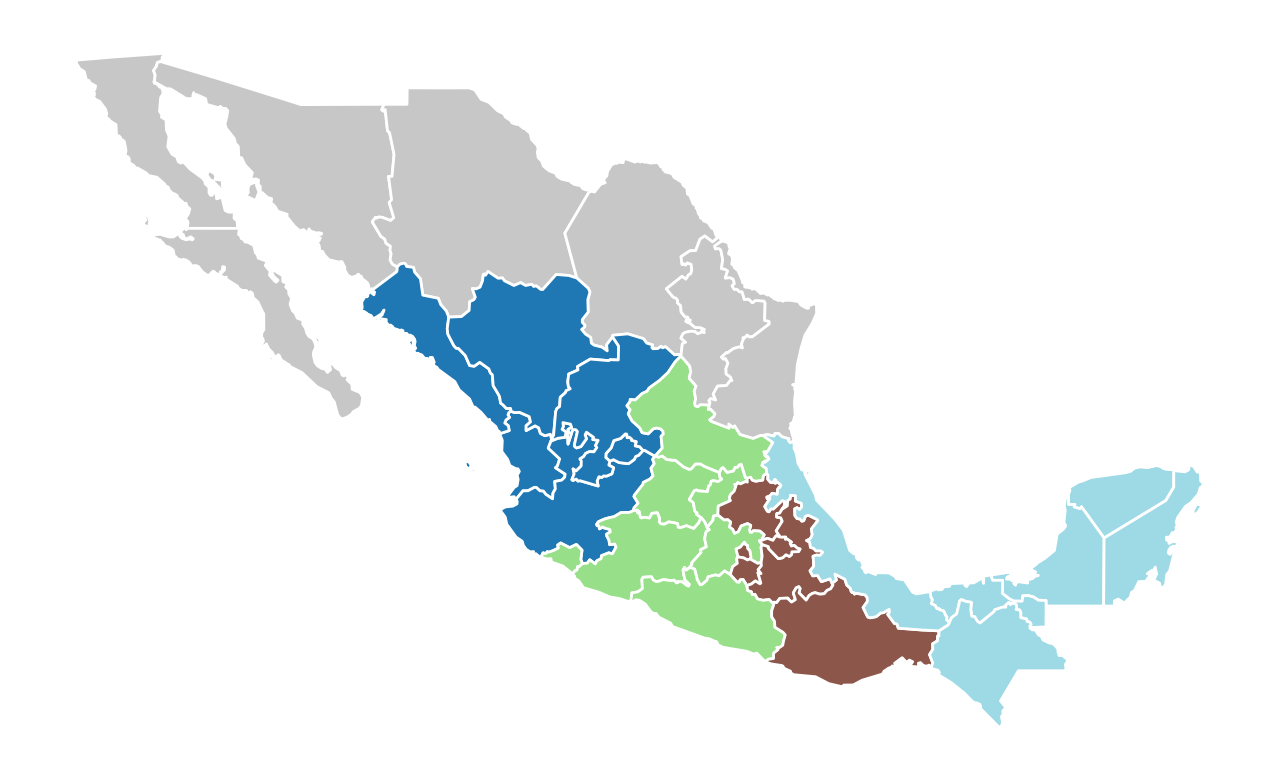
The model solution results in five regions, three of which have six states, and two with seven states each. Each region is a spatially connected component, as required by the max-p problem.
With sensitivity and intuition, the winemaker from the Italian winery Mamete Prevostini masters this red wine in the beautiful and blooming countryside of Valtellina. A must for connoisseurs, this snappy Nebbiolo 2015 — Inferno La Cruus Valtellina Superiore DOCG! Flaschenpöstler culinary tip: This Nebbiolo is excellent with burrata or pizza.
The max-p problem involves the clustering of a set of geographic areas into the maximum number of homogeneous regions such that the value of a spatially extensive regional attribute is above a predefined threshold value. The spatially extensive attribute can be specified to ensure that each region contains sufficient population size, or a minimum number of enumeration units. The number of regions \(p\) is endogenous to the problem and is useful for regionalization problems where the analyst does not require a fixed number of regions a-priori.
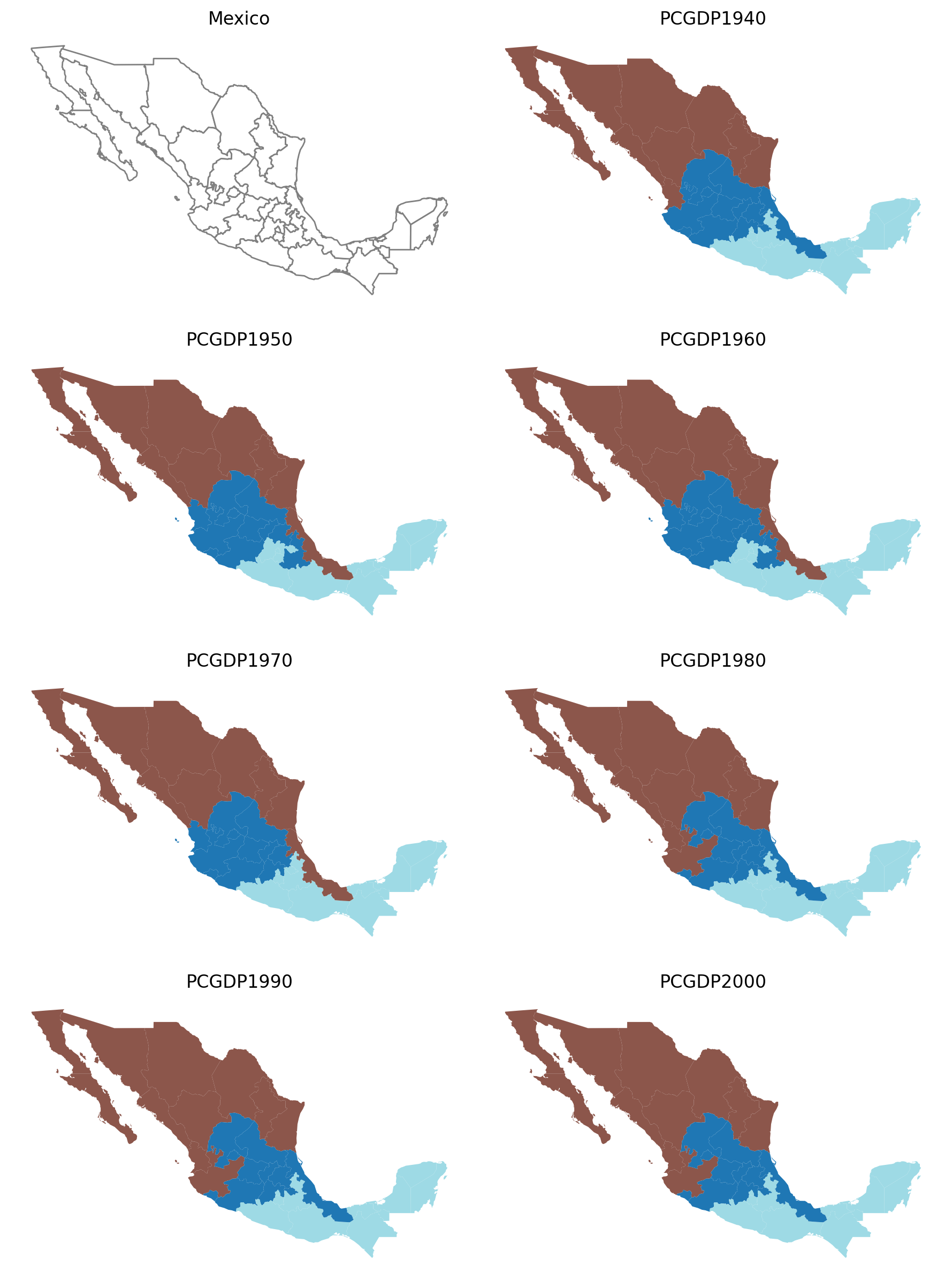
We can first explore the data by plotting the per capital gross regional domestic product (in constant USD 2000 dollars) for each year in the sample, using a quintile classification. Here we will define a function for creating subplots useful in visual comparisons, which also can solve Max-P instances and will be used again later).
To develop our holistic view, we can treat the six cross-sections as a multidimensional array and seek to cluster 32 Mexican states into the maximum number of regions such that each region as at least 6 = 32 // 5 states and homogeneity in per capita gross regional product over 1940-2000 is maximized.
In general terms, the north-south divide in incomes is present in each of the 7 decades. There is some variation in states moving across quintiles however, and this is true at both the bottom and top of the state income distribution.
To illustrate maxp we utilize data on regional incomes for Mexican states over the period 1940-2000, originally used in Rey and Sastré-Gutiérrez (2010).



 Neil
Neil 
 Neil
Neil