
Incidence of ocular changes due to vitamin 'A' deficiency in ... - 536020
SKU: CA41211BN Categories: Bathroom, Bathroom Faucets, Residential Basin ... Moen Eva 8″ Spread Basin Faucet. B$215.00 – B$349.00. Select options This ...
Used maybe 2 times. We moved to a new facility shortly after purchasing this. Our new facility has a air system for the whole building.
As at the end of 2021, almost 47% of the global hydrogen production is from natural gas, 27% from coal, 22% from oil (as a by-product) and only around 4% comes from electrolysis. Electricity had a global average renewable share of about 33% in 2021, which means that only about 1% of global hydrogen output is produced with renewable energy. Electrolytic hydrogen from dedicated production remained limited to demonstration projects adding up to a total capacity 0.7 GW in 2021. In contrast, the 1.5°C Scenario would need 4-5 TW by 2050, requiring a faster rate of growth than that experienced by solar photovoltaic (PV) and wind to date.
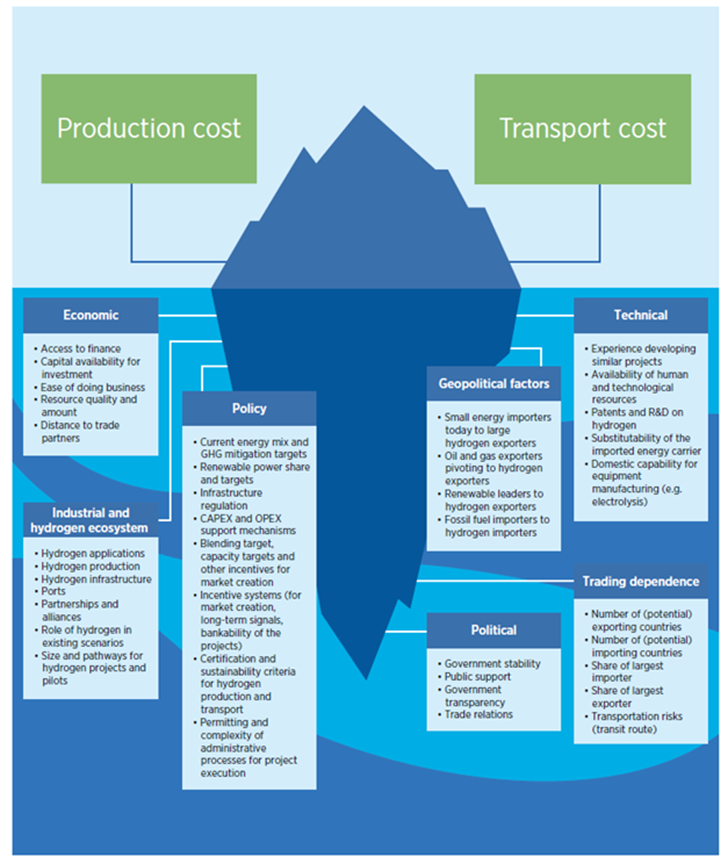
Hydrogen trading, however, will not only be defined by the economic benefit. In the long term, when technologies have reached full maturity and are deployed at large, it is expected that importing countries will be able to count on multiple alternatives within a small cost range. Therefore, trading partners will, to a large extent, be defined by non-economic factors (see Figure 3).
The higher energy density of hydrogen-derived commodities effectively increases the distance that energy can be transported in a cost-effective way, connecting low-cost renewable energy regions with demand centres that have either limited renewable potential or costly renewable energy. Global energy trade through hydrogen derivatives would provide economic benefits as importing countries can tap into cheaper (than domestic) resources, improving the resilience of the system since there are alternative ways to satisfy final energy demand, and hence strengthening energy security.
by SA Alsaedi · 2018 · Cited by 2 — The aim of this prospective observational study is to evaluate the accuracy of BiliCheck device for measurement of TcB when BiliCal is reused twice and three ...
Packard Motor Part number 43587. Replaces GE Stock number 3587. Motor Specifications: 1/2 HorsePower; 115 Volts; Single Phase; 7.5 Amps on High Speed; 1075 RPM ...
Shop by Category · Welch Allyn Diagnostic Sets · Ear Nose Throat · Ophthalmic · Power Sources · Lighting · Patient Monitors · Spot Vital Signs · Connex Vital ...
Looking for V-Belt: For 2475 Series, TS5, Fits Ingersoll Rand Brand? Purchase it from Imperial Supplies along with 1.5 million other products.
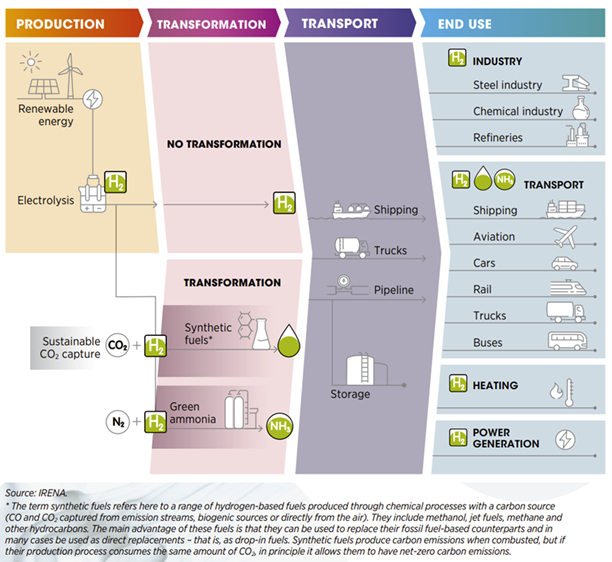
Hydrogen is a versatile energy carrier (not an energy source). It can be produced from multiple feedstocks and can be used across virtually any application (see Figure 1). Renewable electricity can be converted to hydrogen via electrolysis, which can couple continuously increasing renewable energy with all the end uses that are more difficult to electrify. This coupling also allows electrolysers to provide flexibility to the grid, complementing alternatives such as batteries, demand response and vehicle-to-grid in smart electrification.
Laser Cut Boss Boss 1" Long .625 OD x .385 ID Thru. Material: .625 x .120 Wall Stainless Steel. Bare Finish. Sold Each. Key Words: Turned Bushing, Threaded ...
An MRI scanner is made up of four components: the magnet, gradient coils, rf transmitter and receiver, and the computer.
It refers to a company that produces parts or equipment that are then marketed and sold by another company that's known as a value-added reseller (VAR). The OEM ...
Hydrogen is produced on a commercial basis today – it is used as a feedstock in the chemical industry and in refineries, as part of a mix of gases in steel production, and in heat and power generation. Global production stands at around 75 MtH2/yr as pure hydrogen and an additional 45 MtH2/yr as part of a mix of gases. This is equivalent to 3% of global final energy demand and similar to the annual energy consumption of Germany.
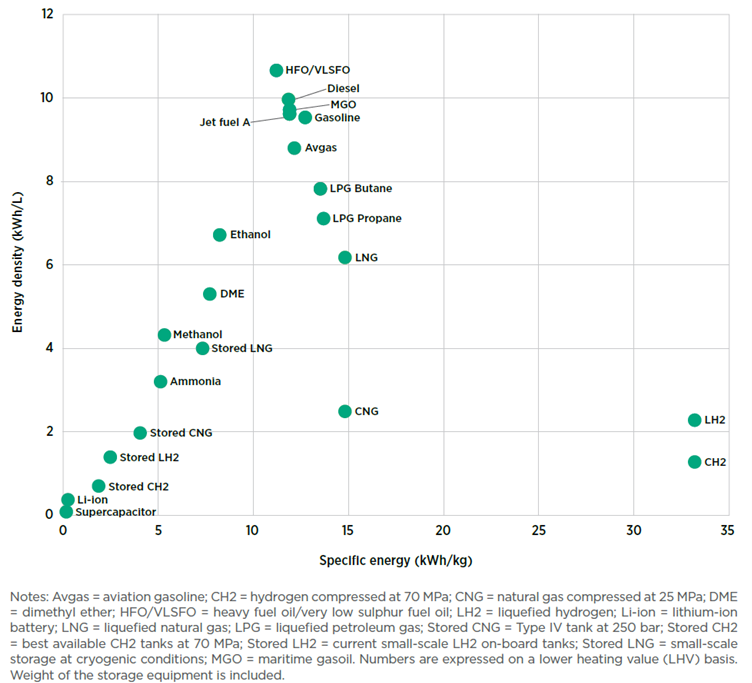
The full value of hydrogen, however, is only fully realised when it is further converted to derivatives. Hydrogen can be combined with carbon from CO2 to produce hydrocarbons and virtually any molecule. It can be used to produce ammonia, which can be used as feedstock for fertilisers (the majority of current use) or as fuel for new applications such as shipping. It can also be used to produce methanol, synthetic fuels, or even as a reducing agent to replace coal in iron production. Once it is converted to these commodities, the energy density is increased further, making long-distance transport and long-term storage cost-effective. Thus, the conversion to hydrogen derivatives effectively unlocks global renewable energy trade. For instance, liquid ammonia has almost eight times the energy density (MJ/m3) of lithium-ion batteries and more than 20 times the gravimetric energy density (MJ/kg) (see Figure 2).
Hydrogen use as an energy carrier remains limited and is principally limited to road vehicles. By June 2021 more than 40 000 fuel cell electric vehicles were in circulation around the world, with almost 90% of those in four countries: Korea, the United States, the People’s Republic of China, and Japan. By the end of 2020 there were about 6 000 fuel cell electric buses (95% of those in China) and more than 3 100 fuel cell electric trucks. These totals are small fractions of the global vehicle fleet.
by E Behling · 1997 · Cited by 174 — UA58, p~rman~, ~0p~ ~0~. 1N7R0DUC710N. Aer0~c 6~-0~d~10n 15 very w1de~ u5ed f0r the. ~eatment 0f car60nace0u5 p0Hutan~. H0weve~ the pr0ce55e5 wh1ch fa11 1nt0 ...
In recent years an increasing number of countries have committed to achieving net zero emissions. By April 2022 131 countries covering 88% of global greenhouse gas emissions had announced net zero targets. Anthropogenic emissions have already led to a global temperature increase of 1.1°C compared to pre-industrial levels. There is a broad understanding that net zero by 2050 is imperative to increase the chances of keeping this temperature increase to within 1.5°C. This renewed focus means that emissions from all the energy end uses need to be mitigated. While energy efficiency, electrification and renewables can achieve 70% of the mitigation needed, hydrogen will be needed to decarbonise end uses where other options are less mature or more costly, such as heavy industry, long-haul transport and seasonal energy storage. Considering these applications, hydrogen could contribute 10% of the mitigation needed to achieve the IRENA 1.5°C Scenario and 12% of final energy demand.



 Neil
Neil 
 Neil
Neil